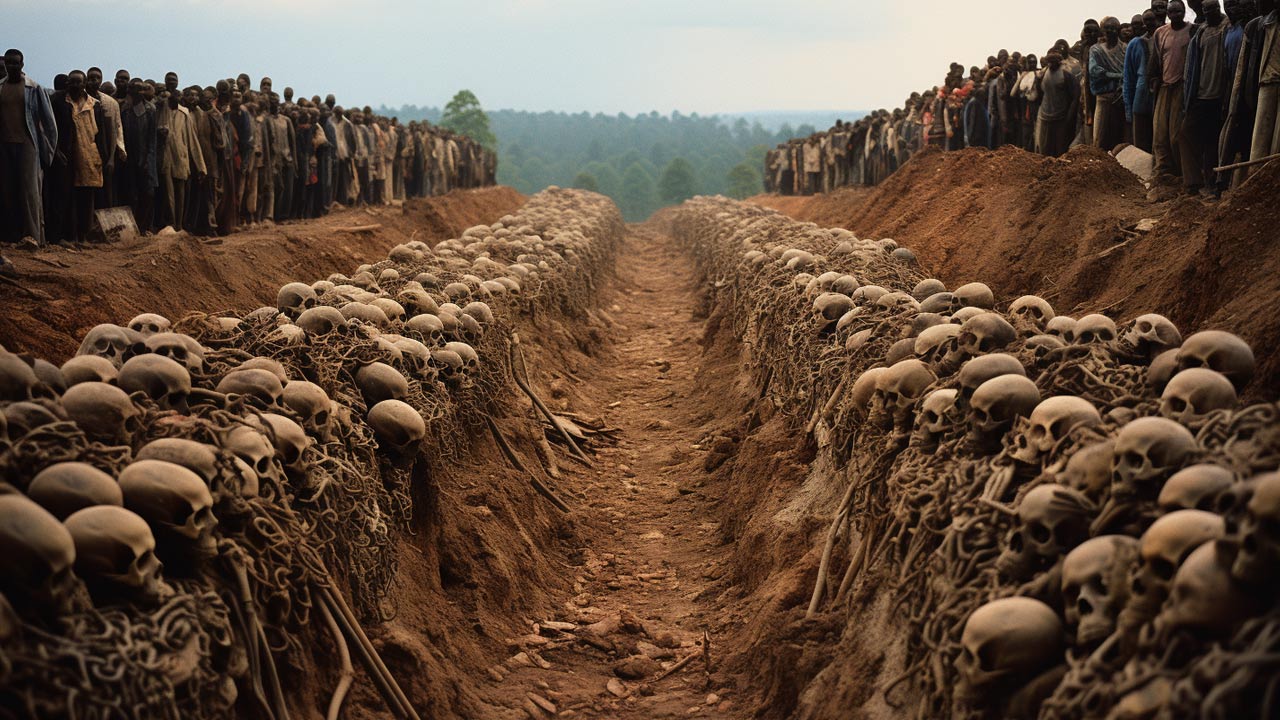
In April 1994, Rwanda, a small country in East Africa, plunged into horror. Within the space of a few months, nearly 800,000 people - the majority of them Tutsi, but also moderate Hutu - were massacred in what became one of the most appalling genocides of the twentieth century. This systematic slaughter, planned and executed with terrifying precision, was not a sudden or unexpected event, but the culmination of a long history of ethnic tensions exacerbated by decades of colonial and post-colonial policy.
The Roots of a Tragedy
The roots of the Rwanda genocide reach deep into the complex colonial legacy, where ethnic categorisation was wielded as a tool of division and control. Distinctions between communities, amplified by the colonisers, created fertile ground for hatred and mistrust. The spread of hate speech - through complicit media above all - prepared the ground for the unthinkable.
The International Community Confronts Its Responsibilities
The scale of the tragedy laid bare the failure of the international community to prevent and halt the genocide. Despite warning signs and desperate appeals for help, the international response came too late and fell far short. Peacekeeping forces on the ground, hamstrung by their rules of engagement and a lack of political will, found themselves powerless in the face of escalating violence.
A Painful Awakening
The Rwanda genocide remains an open wound in the world’s conscience, a painful reminder of the tragic consequences of inaction and indifference. It also served as a catalyst for rethinking mechanisms of conflict prevention and humanitarian intervention. Lessons have been drawn, institutions reformed - yet the question endures: are we better prepared today to prevent such a tragedy from happening again?
In the deafening silence that followed the genocide, a voice rises - that of the survivors and the righteous - calling humanity back to its duty of remembrance and vigilance. Rwanda teaches us the importance of combating hatred in all its forms and of building an international community that is more committed and more responsive in the face of humanitarian crises.
On this day of commemoration, let us honour the victims of the Rwandan genocide by reaffirming our commitment to peace, justice, and our common humanity. May their memory guide us towards a future in which such horrors are never again a reality.