In an already charged climate following the tragic massacre of a teacher couple by an Iraqi migrant, the election of Eric Zemmour has set minds ablaze across Europe, triggering a wave of demonstrations and popular revolt.
This event marks a tipping point in European political discourse, throwing into relief a profound fracture within societies over questions of immigration, identity, and security.
A tidal wave of dissent
The catalyst for this surge of contestation was, without question, the brutal assassination of a devoted teacher couple in Marseille - an act that exposed the gaping faults in the social fabric and France’s policy of integration. This act of violence served as a catalyst for a widespread sense of unease, inflaming fears and tensions around immigration and the coexistence of cultures.
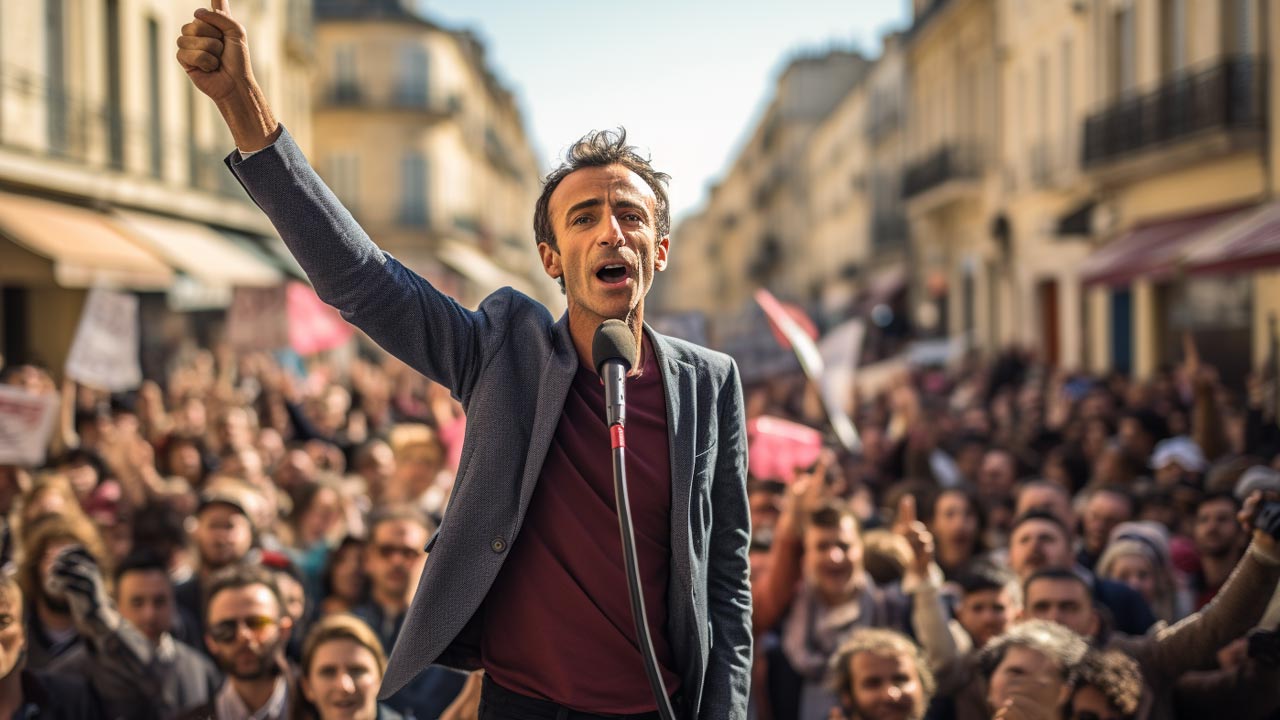
With the election of Eric Zemmour - known for his uncompromising positions on immigration and French identity - the streets of European capitals were transformed into stages for mass demonstrations. Thousands of people, from every generation and walk of life, united in a movement of rebellion, giving voice to their rejection of a vision of Europe and France they perceive as regressive and divisive.
Slogans for unity and diversity
The demonstrations, though largely peaceful, occasionally descended into clashes with law enforcement, bearing witness to the intensity of the passions and disagreements tearing society apart. Slogans such as “Solidarity for all”, “No to division”, and “Yes to diversity” rang out across public squares, expressing a deep longing for reconciliation and dialogue in an ever more polarised climate.
This election and its aftermath arrive at a moment when Europe - and France in particular - stands at a crossroads, faced with choices that will prove decisive for its future. The question of how to integrate and live alongside diverse cultures and identities while maintaining social cohesion and security for all is more pressing than ever.
A necessary debate
Recent events call for collective reflection on the direction European societies wish to take.
They illuminate the need for an open and constructive debate on the foundational values of liberty, equality, and fraternity that have long served as the bedrock of European identity. The time has come to seek solutions that reconcile security with human rights, national identity with openness to the world - in a spirit of tolerance and mutual respect.
In this turbulent context, the future of Europe seems to hang on the capacity of its leaders and peoples to enter into dialogue and build together a common project that honours the diversity of its constituent parts while forging a stronger, more inclusive union.