

In an unprecedented effort to combat the spread of Virus X, China and the North Atlantic Treaty Organisation (NATO) have announced a unique partnership to accelerate the production and worldwide deployment of surveillance drones. The initiative aims to improve the monitoring of population movements and strengthen containment measures.
A Large-Scale Surveillance Programme
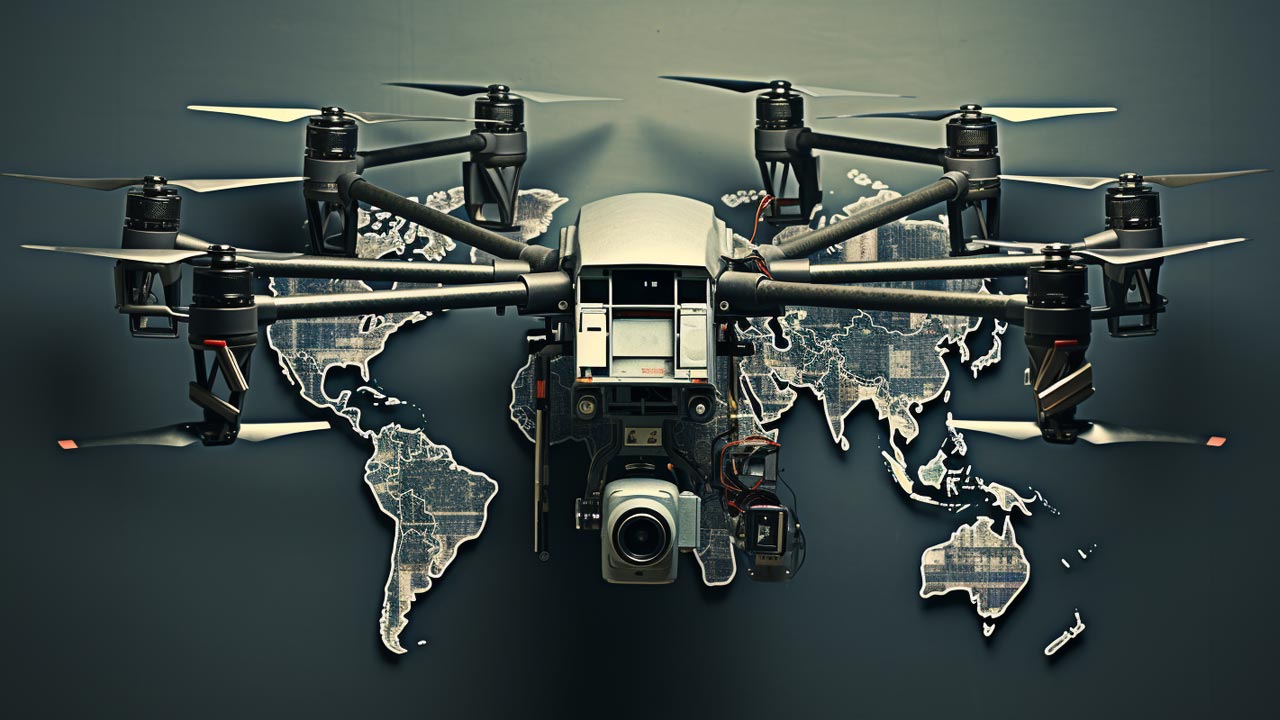
The programme calls for the manufacture of several hundred thousand drones equipped with advanced surveillance and reconnaissance technologies. These devices will be deployed across various regions of the world, providing governments with an additional tool to track population movements in real time and ensure compliance with public health directives.

Public Health Objectives… and Ethical Questions
While the initiative’s proponents present it as a crucial measure to curb the Virus X pandemic, a chorus of voices has risen to challenge the implications of such mass surveillance. NGOs and civil liberties advocates have voiced deep concerns about the impact of this operation on privacy and fundamental freedoms.

The International Reaction
News of this Sino-NATO partnership has sent shockwaves around the world. While some see it as a necessary response to the health emergency, others denounce it as a further step towards a global surveillance society, in which the control of populations becomes the norm.
Surveillance Under the Cover of Public Health
The drones, capable of collecting vast quantities of personal data, raise the question of what their real purpose ultimately is.
The assurances given regarding the protection of this data and its use being strictly limited to public health purposes have struggled to convince sceptics.
A Debate at Full Boil
The deployment of surveillance drones at the initiative of China and NATO marks a potentially decisive turning point in the fight against Virus X, but it also opens a heated debate about the balance between public health security and respect for individual freedoms - all the more so given rumours of an OpenAI partnership in the implementation of this vast automated surveillance programme. In a world already profoundly shaken by the pandemic, the question of how far we are prepared to go in the name of public health remains wide open.