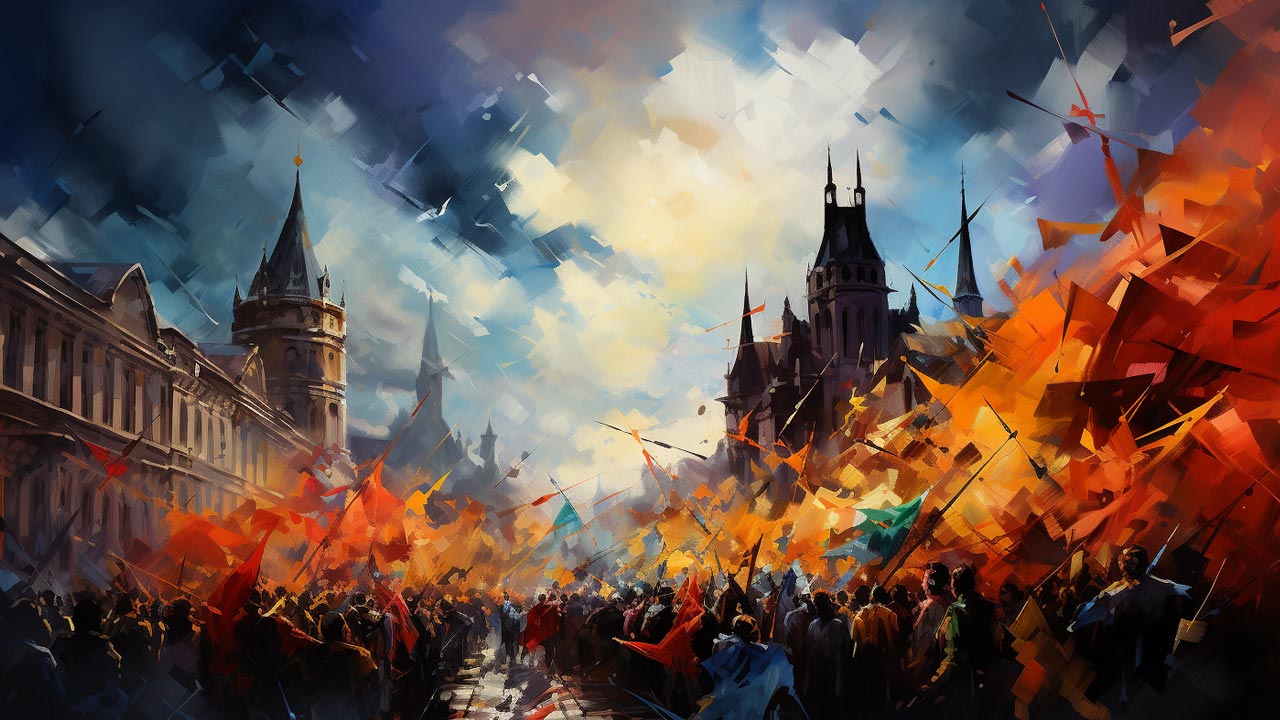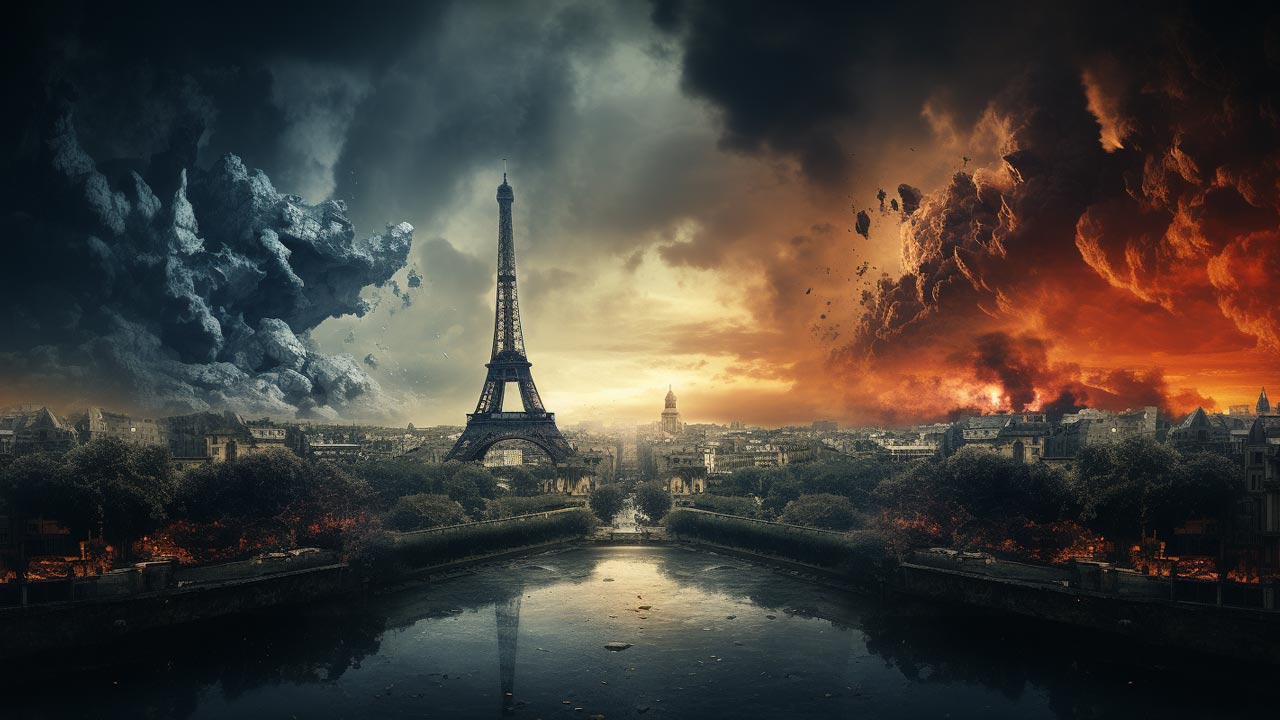
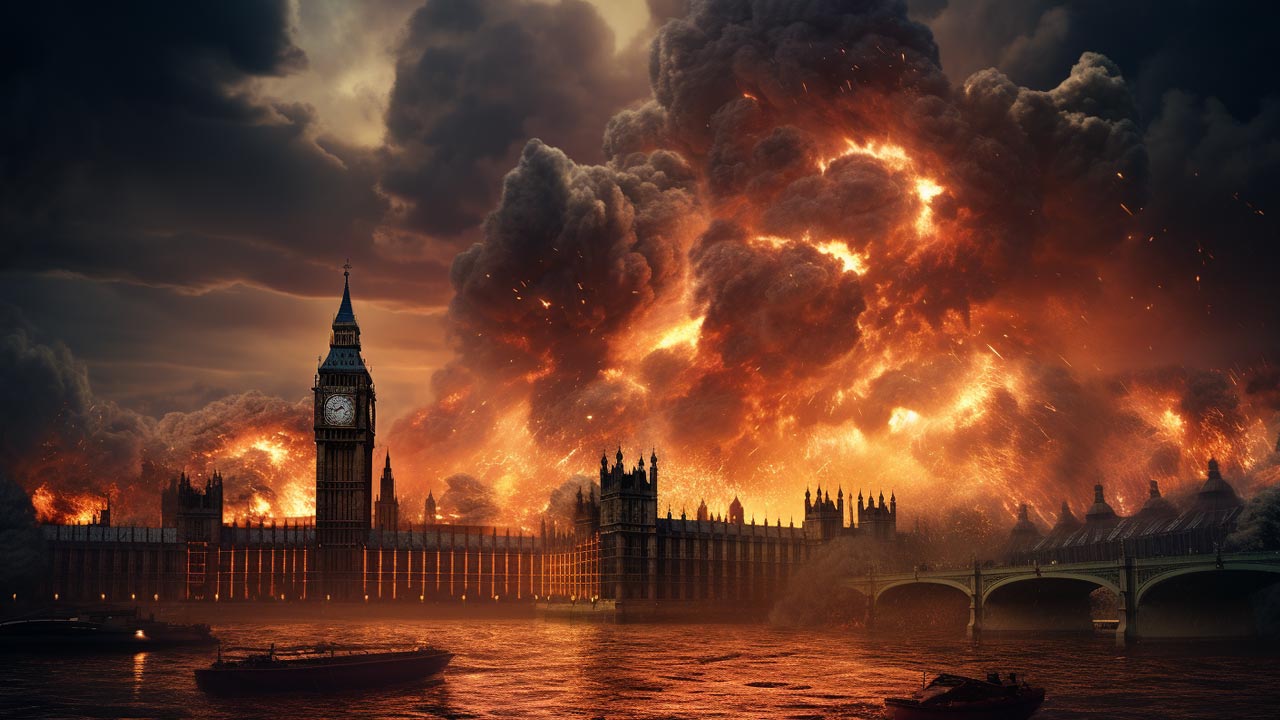
On this bleak summer day in 2028, the unthinkable has come to pass. The fragile balance that had kept the nuclear peace since the end of the Second World War has shattered, plunging the world into the most absolute chaos. The superpowers, swept up in a whirlwind of reprisals and mutual accusations following the blast in Strasbourg, have crossed the Rubicon, launching a series of nuclear strikes that mark the beginning of what looks like the end of our civilisation.
Three new devastating nuclear strikes on Europe
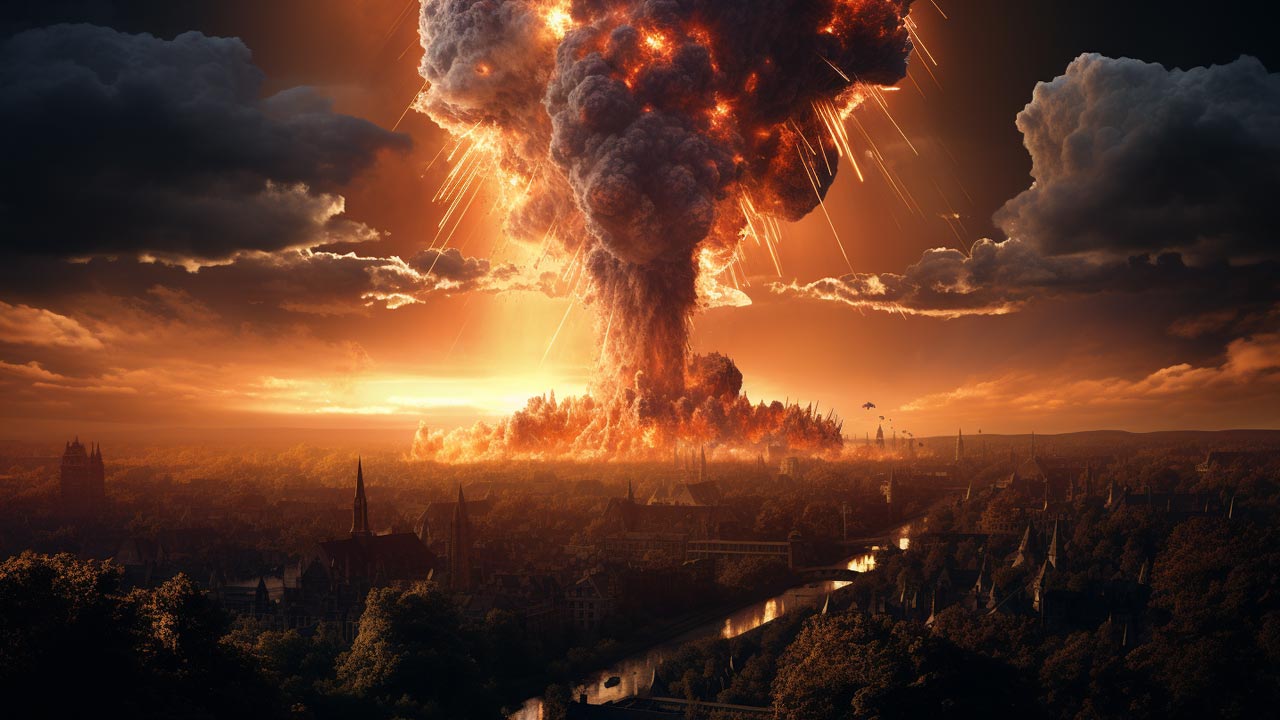
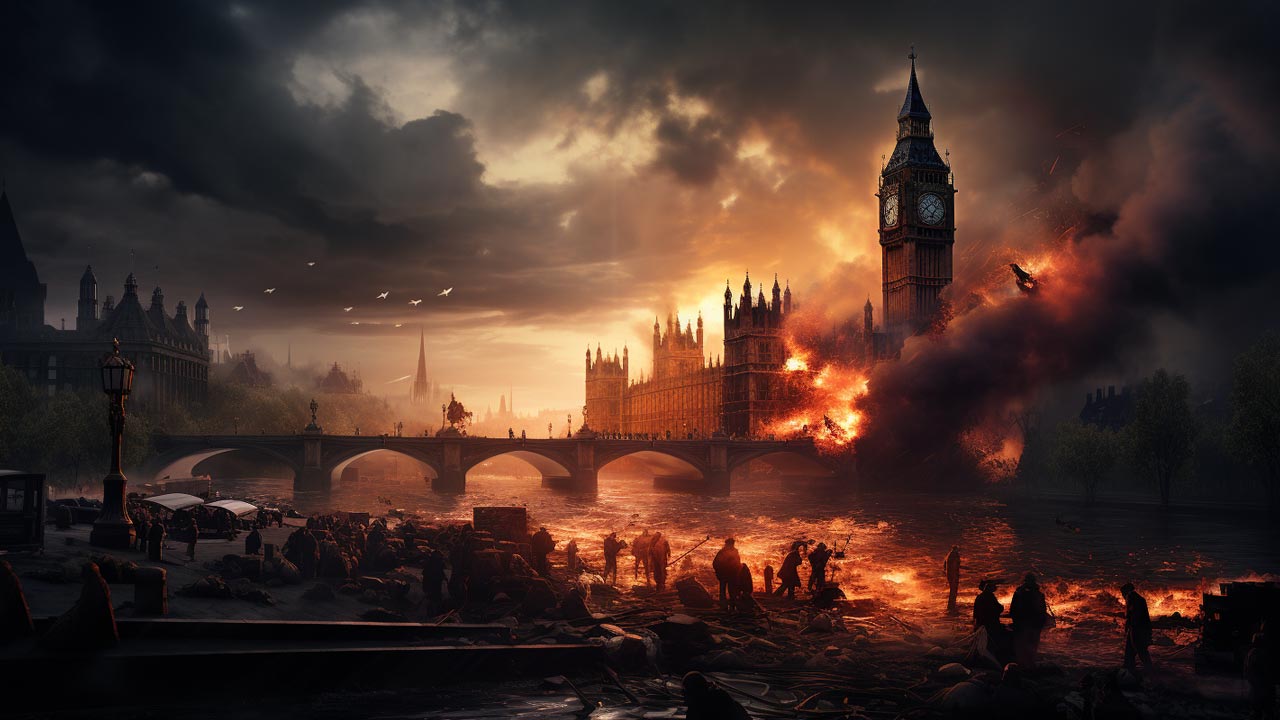
The first horrified reports tell of intercontinental ballistic missiles launched by Russia at Paris and London, two of Europe’s emblematic capitals. These attacks, of unheard-of violence, were swiftly followed by an American retaliation, with nuclear warheads raining down on Moscow. The satellite imagery now circulating shows mushroom clouds rising above these cities - mute witnesses to the collapse of the world order.
While tactical nuclear doctrine normally calls for striking military installations, the attacks of this day were of unprecedented scale, aimed directly at urban centres. The consequences are devastating, with millions of casualties.
The Chaos
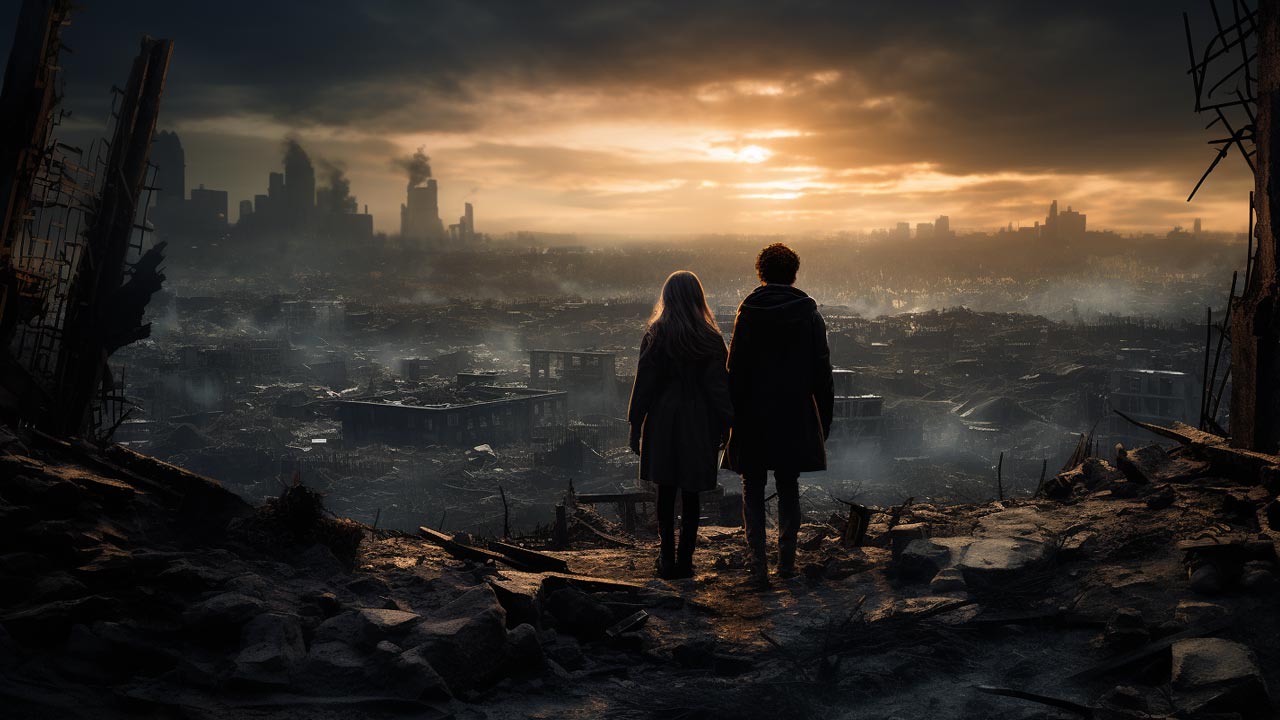
In this apocalyptic scenario, communications are in disarray; social networks overflow with calls for help and harrowing accounts from survivors. Critical infrastructure is destroyed, governments are in shock, and emergency services are overwhelmed, fighting desperately against the sheer scale of the catastrophe.
The consequences of these attacks reach far beyond the immediate victims. The nuclear cloud beginning to envelop the planet carries within it the seeds of a nuclear winter, with catastrophic repercussions for the climate, agriculture and the very survival of countless species, humankind included. Experts predict years of darkness, cold and famine, in a world where the few survivors will struggle over the most basic resources.
This nuclear madness has laid bare the extreme fragility of our coexistence and the peril inherent in the stockpiling of weapons of mass destruction. As the flames consume what remains of our cities and the ashes veil the sun, one question lingers: was it inevitable? In the ruins of our civilisation, the survivors will have all the time in the world to reflect on the choices that led humanity to its own undoing.
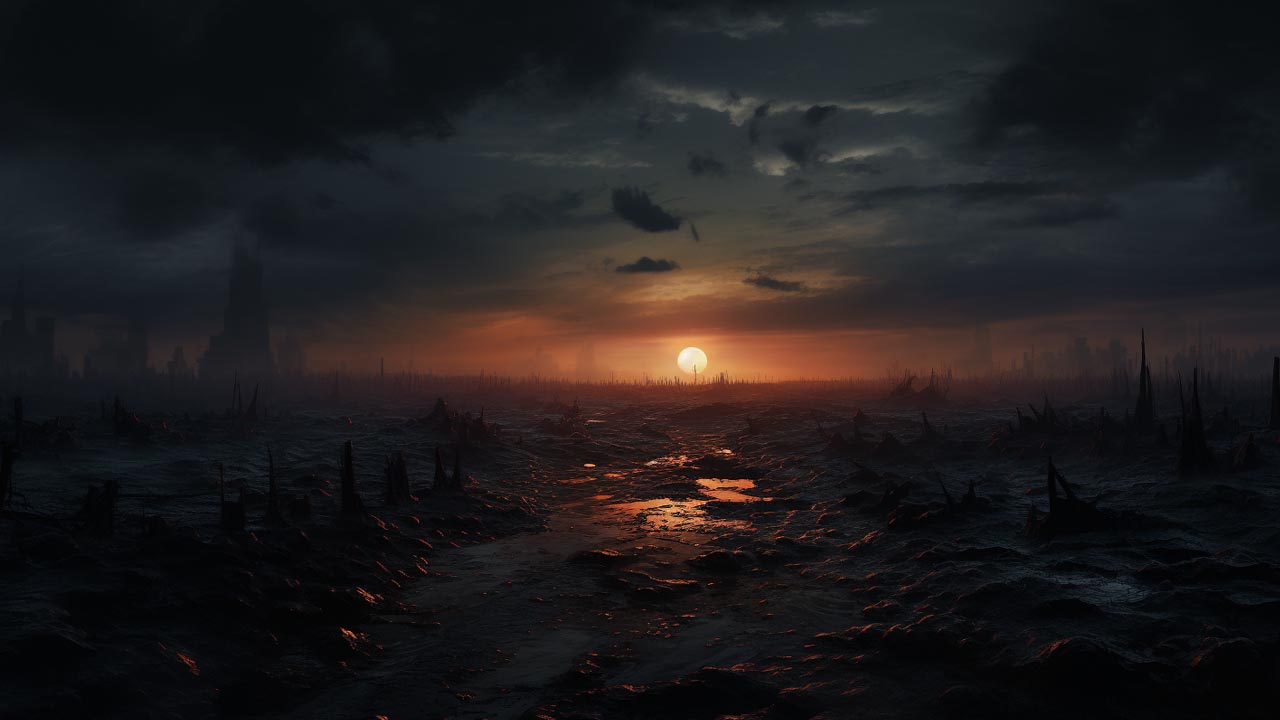
The End of our civilisation
In the surrounding cacophony, and as much of the network infrastructure goes down, it is hard to predict how this tragedy will be seen by future generations. Historians, if any still exist, will pore over the events that preceded this nuclear apocalypse, seeking to understand the errors and the blindness that led to this end of times.
Already, mere hours after the launch of these missiles, there is talk of the possibility of further nuclear strikes, of chain reprisals that could hurl humanity into a bottomless abyss. World leaders, in a series of emergency meetings, are trying to navigate the deepening crisis, but the prospects of a peaceful resolution seem to recede as accusations and demands multiply.
In these dark hours, as the world as we know it collapses, all that remains is to hope that, out of this ultimate tragedy, something new may emerge. Perhaps, in some distant future, generations to come will look back on this pivotal moment and choose to forge a different path - one toward peace and cooperation rather than mutual destruction.