A summit in Washington, a meeting in New Delhi, a new vocabulary — Pax Silica. Behind the formula lies a documented shift: power is no longer measured solely in military divisions, but in access to semiconductors, rare earths, and artificial intelligence models. Europe, absent from these tables, is watching a strategic train pass by, upon which its industrial autonomy nevertheless depends.
A Quad Changing in Nature
The latest meeting of the Quad foreign ministers (United States, India, Japan, Australia) in New Delhi revealed, according to Revue Conflits, a profound mutation of the alliance: from a consultation framework centered on maritime security, the Quad is shifting toward a strategic and technological architecture, structured around semiconductors, critical minerals, undersea cables, cyber-resilience, and advanced manufacturing.
« The Quad is quietly transitioning from a naval security dialogue to a platform seeking to shape the future economic and technological order of the Indo-Pacific. »
This reorientation, the same source notes, is aimed less at militarily containing Beijing than at building reliable and alternative supply chains. The future of the alliance will depend, according to this same article, on its ability to expand its circle — South Korea, Taiwan, Japan, but also Vietnam, Indonesia, Singapore, the Philippines — as economic security has become inseparable from national security.
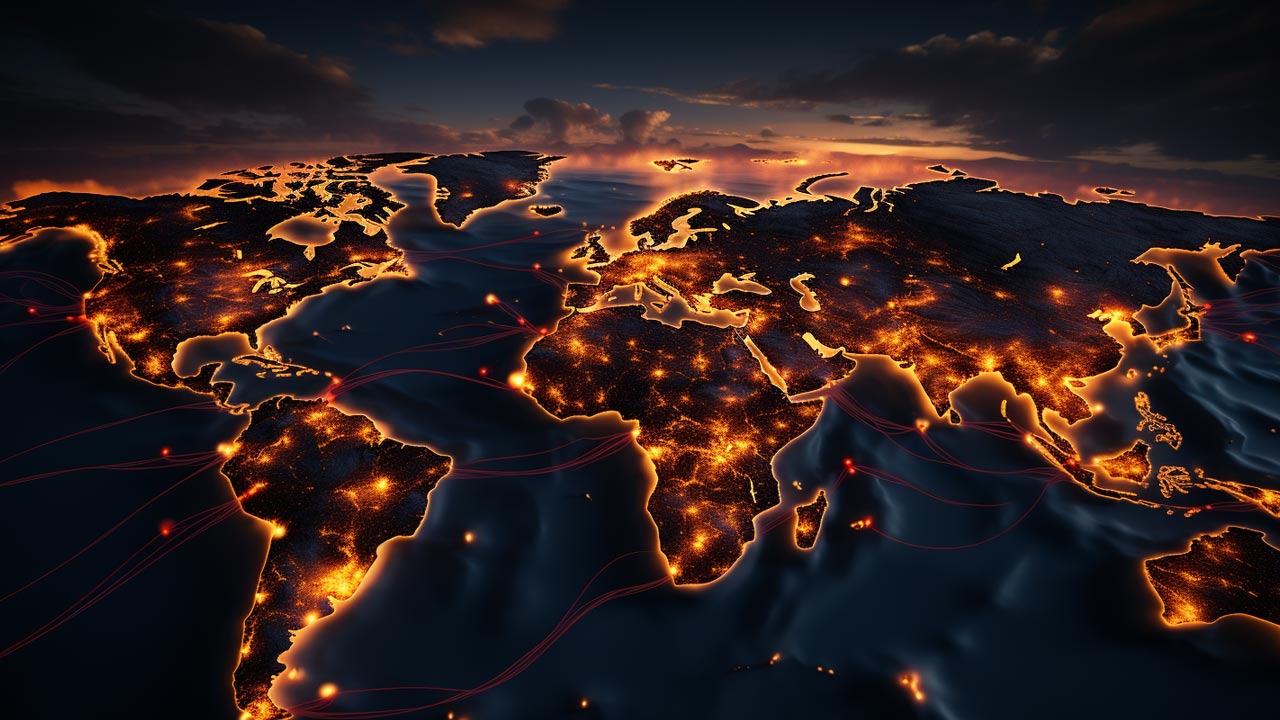
From the Indo-Pacific to Washington: A Global Supply Chain Alliance
The shift extends beyond the Quad alone. On December 11, 2025, an inaugural summit in Washington marked the birth of the “Pax Silica Initiative,” led by the US Department of State, reports International Finance. The stated objective: to secure artificial intelligence and semiconductor supply chains.
The founding members of this coalition:
- United States
- Australia
- Greece
- Israel
- Japan
- Qatar
- Republic of Korea
- Singapore
- United Arab Emirates
- United Kingdom
In February 2026, India, presented as the world’s fourth-largest economy, joined the group — a sign that demographic and industrial power now takes precedence over geographic anchoring in defining these new alliances.
Interviewed by CNBC, Jacob Helberg, US Assistant Secretary of State for Economic Affairs, summarized the ambition in terms that, while intended to be defensive, draw a clear fault line:
« Pax Silica is not about China, it’s about America. We want to secure our supply chains. »
Rare Earths, Beijing’s Silent Weapon
The trigger for this Western acceleration is Chinese. In October 2025, Beijing published its “Announcement No. 61 of 2025,” tightening export controls on five additional rare earth metals — adding to the seven already restricted since April of the same year, according to International Finance.
The result is striking:
- Out of the 17 identified rare earth metals, China now imposes export restrictions on 12 of them.
- Foreign companies must obtain a special authorization from Beijing to export rare-earth-based magnets or semiconductor materials containing at least 0.1% of heavy rare earths sourced from Chinese territory.
- This measure, in effect since December 2025, forces companies to justify to Chinese authorities the intended end-use of products manufactured from these materials.
This mechanism, invoking national security, strikes at the very heart of the globalist software: the free movement of goods and technologies. Globalization, the source highlights, thus seems to be shifting from an integrated system toward a concentrated globalization, where supply chains reorganize according to geopolitical criteria rather than market logic alone.
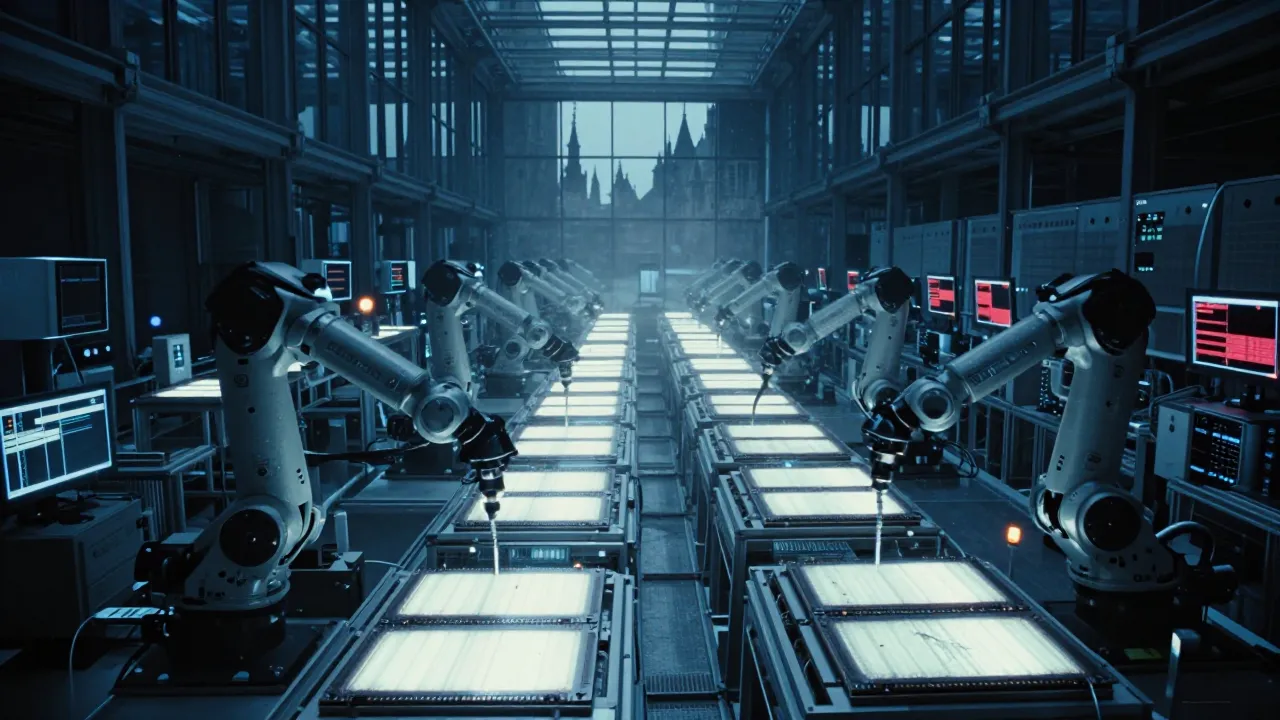
De Facto Governance, Without Europe at the Table
What is striking about the Pax Silica configuration, whether in the expanded Quad or the Washington-led initiative, is the composition of the circle: Asian powers, Gulf petrostates, Anglo-Saxon allies — and an almost total absence of Western European nations from the founding decisions. Neither France, Germany, nor the European Union as a bloc are listed among the members of the Washington summit.
This absence is not a mere detail of protocol. It reflects a shift in the global strategic center of gravity toward an Indo-Pacific-American axis, where negotiations are already underway for:
- access to advanced semiconductors;
- securing critical minerals;
- governance standards for artificial intelligence;
- the resilience of digital infrastructure and undersea cables.
A Europe acting as a mere spectator at these tables risks suffering, rather than negotiating, the terms of its own technological dependence — a silent dispossession, unnamed but nevertheless committing its industrial sovereignty for decades to come.
Conclusion: Displaced Sovereignty
The vocabulary of Pax Silica tells of a shift broader than just microchips: global power is no longer primarily negotiated in traditional multilateral forums, but in ad hoc technological coalitions, tightened around a few capitals with critical resources or decisive industrial capabilities. That Western Europe is absent from this raises a simple but heavy question: who will write, in the coming years, the rules upon which its own strategic autonomy depends — itself, or others in its place?