

A report by the Center for Studies on Family and Social Solidarities (CESOF) paints a worrying picture: a decline in marital commitment, rising individualism, and economic precariousness are converging to weaken the family unit, the historical pillar of social cohesion.
A Rapidly Restructuring Family Model
The CESOF think tank, dedicated to the study of social cohesion, has just published an in-depth study on the factors of family stability whose findings, reported by Valeurs Actuelles, highlight a profound transformation of the French family structure.
The central finding can be summed up in a single sentence by economist Jean-Didier Lecaillon, quoted in the report:
« The family constitutes the basic unit of society; it is the natural reality upon which social construction is founded. »
Yet this foundation is cracking. According to the cited data, the so-called “traditional” family - a couple with children - remains the majority model but is seeing its share decline: it still represented 70.4% of families with minor children in 2011, a proportion that has been steadily decreasing ever since.
At the same time, one in four families in France is now a single-parent family, representing an 18% increase in less than ten years - a structural shift that is far from anecdotal.
Precariousness, a Direct Corollary of Family Breakdown
The CESOF report establishes a close link between the weakening of the couple and exposure to poverty. Single-parent families, which most often have only one child, accumulate multiple vulnerability factors:
- they more frequently live in overcrowded housing;
- they are more exposed to economic precariousness;
- they are more often tenants in social housing rather than homeowners;
- one-third of the parents heading them are unemployed.
The most striking figure concerns children: in 2018, 41% of children living in a single-parent family were below the poverty line, according to data cited by Valeurs Actuelles.
This finding aligns with earlier work by the High Council for Family, Childhood and Age (HCFEA), which already noted in 2018 that child poverty exceeds that of the general population: in 2014, 14% of the metropolitan population - or 8.6 million people - lived below the poverty line, compared to 19.8% of children. The HCFEA report had already identified single-parent and large families as the most exposed, with a risk of social reproduction of precariousness from one generation to the next.
The Role of a Stable Couple as a Shield
The CESOF report emphasizes a point often missing from public debate: far from being a mere private preference, marital stability constitutes an objective factor of security for the family. It fosters:
- the economic stability of the household;
- better conditions for children’s education;
- a framework more conducive to their development.
Conversely, the weakening of marital commitment - a decline in marriage, rising separation rates, and the cultural valorization of individual autonomy at the expense of a sustainable family project - directly contributes to the weakening documented by the report. This dynamic is not unique to France: as early as 2006, a study by ATD Fourth World recalled that living as a family is a fundamental right, protected by Article 16 of the Universal Declaration of Human Rights, the exercise of which remains conditioned by the socio-economic context - a useful reminder at a time when public policies are struggling to stem the growing precariousness of households.
Intergenerational Transmission: The Weakened Link
Beyond the numbers, it is the family’s function of transmission that is directly affected. An unstable, precarious, and reconstituted family unit has greater difficulty transmitting economic, social, and cultural capital to the next generation. The HCFEA put it bluntly: a child from a poor family faces a significantly increased risk of finding themselves in a situation of social exclusion in adulthood, due to a lack of necessary resources - whether material, relational, or cultural.
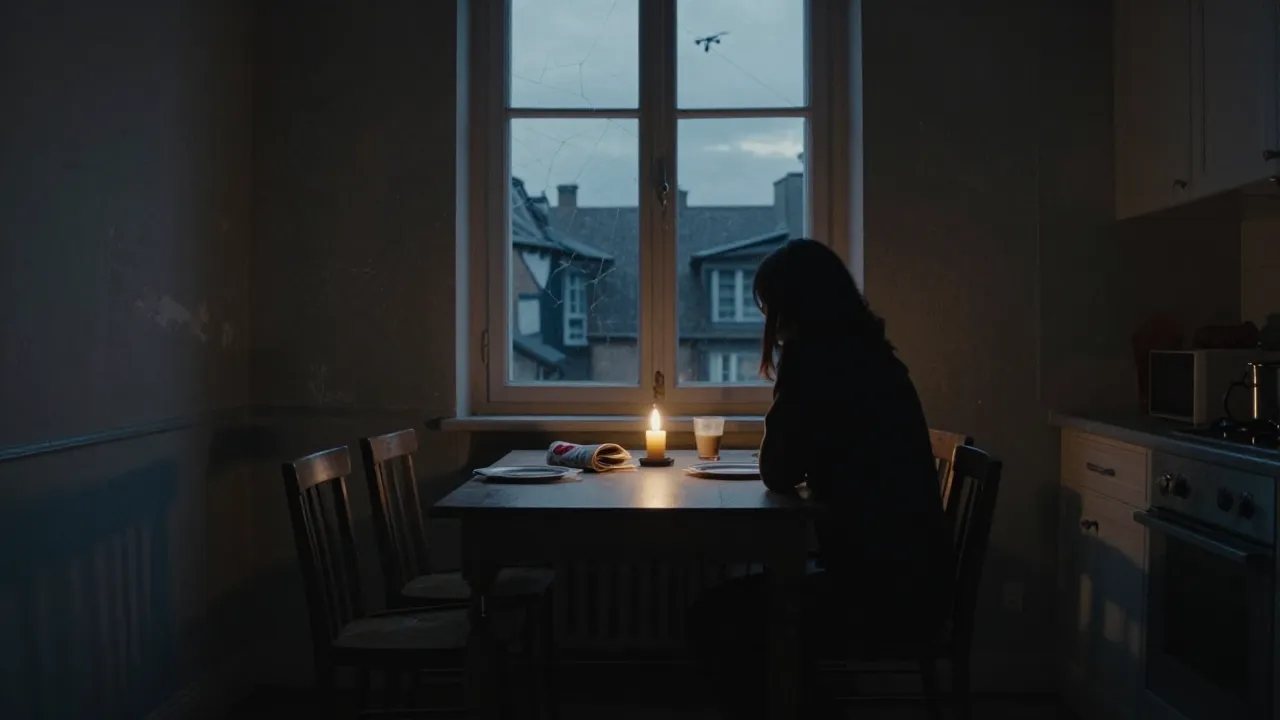
It is precisely this chain of transmission - economic, but also educational and cultural - that the weakening of the family unit interrupts, with effects that are measured over several generations rather than a single electoral cycle.
What the Comparison of Family Policies Reveals
The CESOF report also points out the shortcomings of French public policies in the face of this phenomenon. A recent example illustrates this tension: the 2026 budget made large families the big losers of savings on family allowances, a budgetary choice that runs counter to the recommendations of a report calling, on the contrary, to consolidate support mechanisms for the family unit rather than scaling them back.
This contradiction between the diagnosis - the family as a factor of social stability that should be protected - and public action - budgetary trade-offs that weaken the very families most exposed - is one of the salient points raised by the report’s authors.
Conclusion
The CESOF report does not merely present a statistical finding: it questions the place that French society still reserves for the family as a structure of continuity and transmission. Between the weakening of marital commitment, the rise of precariousness among single-parent families, and public policies that are sometimes out of step with their own stated objectives, the question raised goes beyond a purely sociological framework: it touches upon a society’s ability to ensure, from one generation to the next, the stability upon which it claims to build itself.