
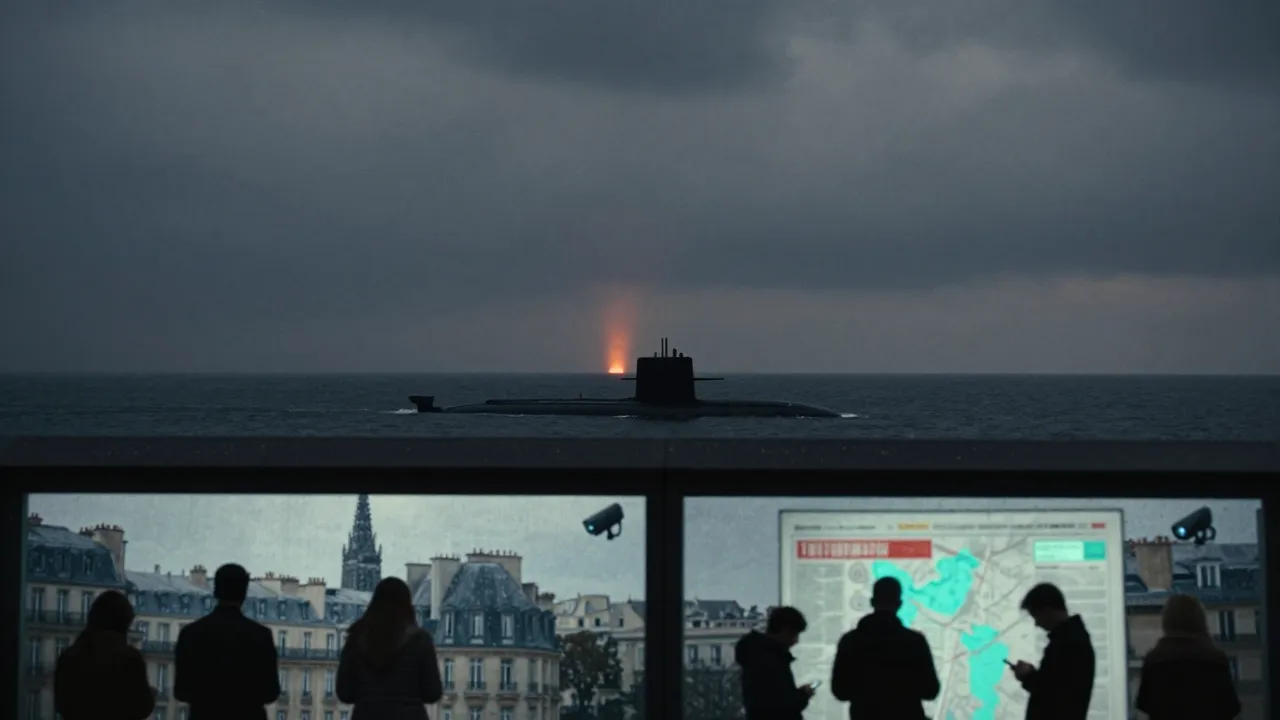
On July 6, a Chinese nuclear submarine fired a strategic ballistic missile into the Pacific - a first since 1982 and a major strategic signal sent to Washington and its regional allies, while European capitals remain strangely silent.
A Launch Breaking Forty-Three Years of Silence
On Monday, July 6, China’s official Xinhua news agency confirmed that a strategic nuclear submarine of the Chinese Navy had successfully launched, at 12:01 p.m., a strategic missile equipped with a dummy warhead toward a designated area of the high seas in the Pacific Ocean. The event is far from trivial: it is the first missile test fired by a Chinese submarine since 1982, and the very first from a nuclear-powered submersible.
According to Alex Payette, co-founder of the consultancy Cercius and a specialist in the People’s Liberation Army, the scope of the message goes beyond mere technical prowess:
“For China, it is important to be perceived as a serious player in terms of military capability. Being able to launch intercontinental ballistic missiles from a nuclear-powered submarine is not something many countries can do, and it shows that you are a very serious player.” - Alex Payette, quoted by RFI
This launch seals Beijing’s lasting entry into a very exclusive club of powers capable of projecting a second-strike nuclear capability from the ocean depths:
- the United States
- Russia
- France
- the United Kingdom
- India
- China
The stakes, notes RFI, lie in the “second-strike capability” - the ability to retaliate after being targeted by a nuclear attack, the cornerstone of any credible deterrence doctrine.
Anger in the Pacific, Silence in Europe
While Beijing claims to have warned its neighbors in advance, as reported by Le Monde on Facebook, the show of force did not fail to trigger a wave of hostile reactions in the region. Foreign ministries issued numerous warnings:
- Canberra called it a “destabilizing launch”;
- Wellington expressed “concern over the intensification of Chinese military activities”;
- Taipei and Tokyo denounced a test “aggravating tensions.”
These statements, reported by RFI, come in an already tense climate: the launch occurred two weeks after joint military exercises between Japan and the United States, and on the very day a defense agreement was signed between Australia and Fiji. Beijing, for its part, had described the late-June US-Japanese maneuvers and joint exercises with the Philippines in similar terms - a diplomatic mirror game that betrays a well-established rhetorical escalation.
Faced with this regional mobilization, the relative silence of European capitals raises questions. No major official statement emerged from Paris, Berlin, or Brussels in the hours following the announcement - a striking contrast to the immediate reactivity of Canberra, Wellington, or Tokyo, which, though located thousands of miles from the European theater, are directly engaged in the strategic reading of the event.
A Chinese Military Regaining the Initiative After Years of Doubt
The internal Chinese context sheds light on the significance of this test. As RFI points out, the People’s Liberation Army has been going through a period of turbulence for several years:
- repeated purges have destabilized its command;
- Xi Jinping has purged several decision-makers from the Central Military Commission;
- embarrassing incidents, such as a nuclear-powered submarine sinking at its dock - revealed by satellite imagery in 2024 - have dented the operational credibility of the Chinese Navy.
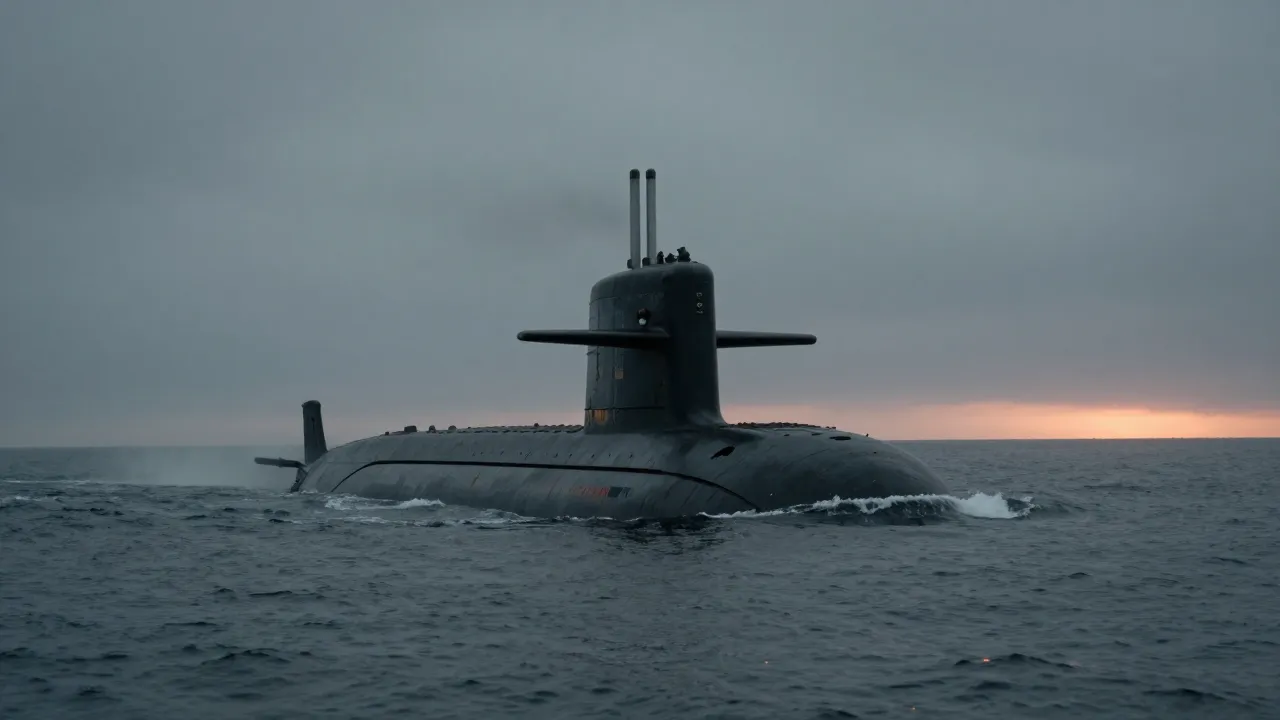
In this context of doubt, the July 6 launch acts as a signal of regaining control: it aims to prove, both to Washington and to regional public opinion, that China’s nuclear deterrence capability remains operational despite internal upheavals.
Taiwan, Trade Routes, and Europe’s Elusive Strategic Autonomy
This launch cannot be separated from the Taiwan issue. RFI explicitly highlights this: the show of force comes as Beijing continues to tighten its grip around Taiwan. Yet the Taiwan Strait and the shipping lanes of the Western Pacific are vital arteries for global trade flows, on which a large part of the European economy depends - semiconductors, electronics, industrial components.
This structural dependence raises a simple question: does Europe still have the means for an independent foreign policy in the face of a shift in the balance of power that is playing out, for the most part, without it? While Beijing consolidates its deterrence doctrine and Pacific powers reorganize their defense alliances, the European debate on strategic autonomy remains, for now, largely theoretical - confined to summits and white papers, far from the budgetary and industrial trade-offs that alone would give substance to continental defense sovereignty.
A Lesson in Realpolitik That Europe Struggles to Hear
The July 6 launch is not a simple, isolated technical test: it is part of a broader reshaping of the Pacific balance, where each regional power - Australia, Japan, New Zealand, Taiwan - is adjusting its posture in real time. Europe, meanwhile, watches from the sidelines, absorbed in its own internal trade-offs, even as the trade routes and value chains that sustain it pass through the waters that Beijing has just reminded everyone are under its strategic vigilance. It remains to be seen whether this distance will remain a deliberate choice of diplomatic prudence, or the symptom of a deeper loss of its ability to influence the course of events that directly concern it.