
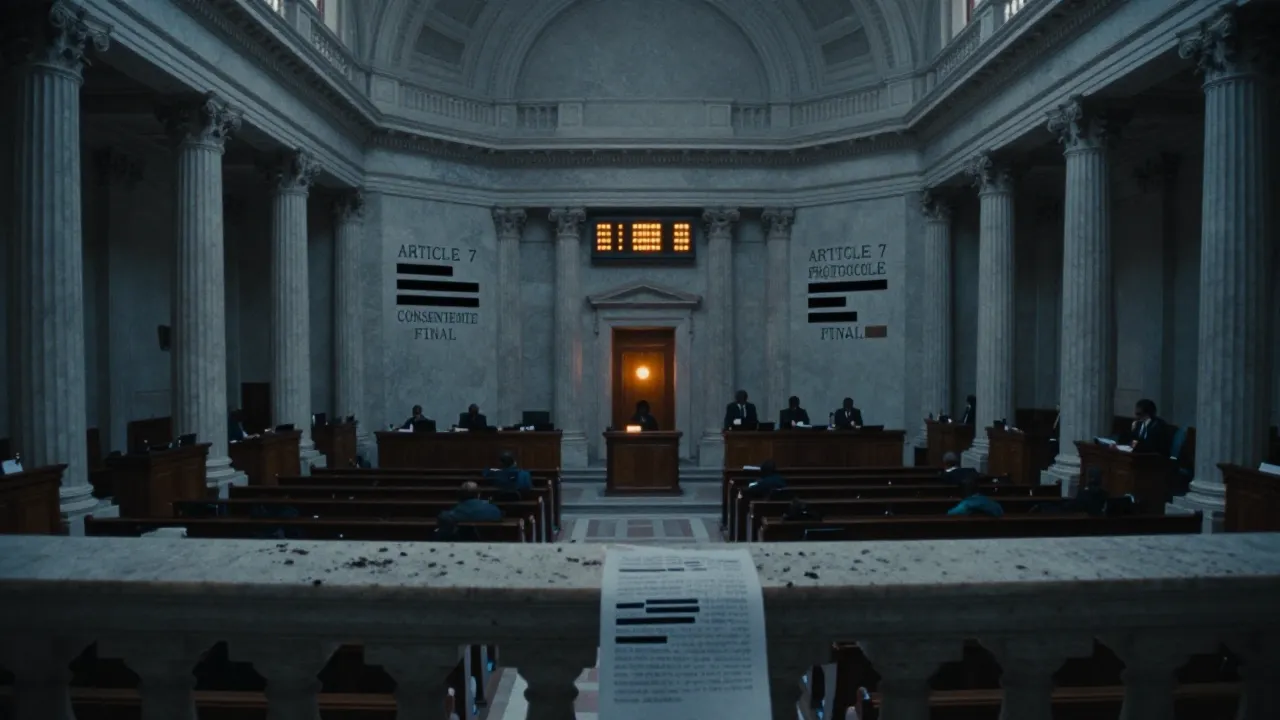
A bill that profoundly redefines French society’s relationship with death has just passed its third reading in the National Assembly, with the text now locked down before its passage to the Senate. An expedited procedure, marginalized intermediary bodies, a civilizational question treated as a technical adjustment.
A Third Reading That Closes the Debate
On June 28, 2026, the National Assembly completed its third reading of the bill on assisted dying, with its supporters hailing a text that is now “secured.” The phrasing warrants examination: in parliamentary vocabulary, a “secured” text at this stage of the legislative shuttle primarily means it has been stabilized against any substantial modification. The Senate can still vote on it, but the opponents’ real room for maneuver has been considerably reduced.
The procedure followed illustrates a heavy trend in contemporary parliamentarism: treating a fundamental anthropological question with the tempo of an amended budget bill. A single week of debates in third reading for a law that alters the legal framework of death in France - that is to say, one of the last absolutes upon which our civilizational taboo has rested for centuries.
“Defining the right to assisted dying as ‘the right for a person who has expressed a request for it to be authorized to use a lethal substance and to be accompanied […] so that they may self-administer it or, when they are physically unable to do so, have it administered by a doctor or a nurse,’” the bill outlines the conditions and procedure for accessing it.
This definition, published by the National Assembly itself, reveals the extent of the normative shift at stake: it is no longer just about deep sedation at the end of life, but about the administration of a lethal substance by a healthcare professional, within a legally organized framework.
A Comfortable Majority, an Unconsulted Country
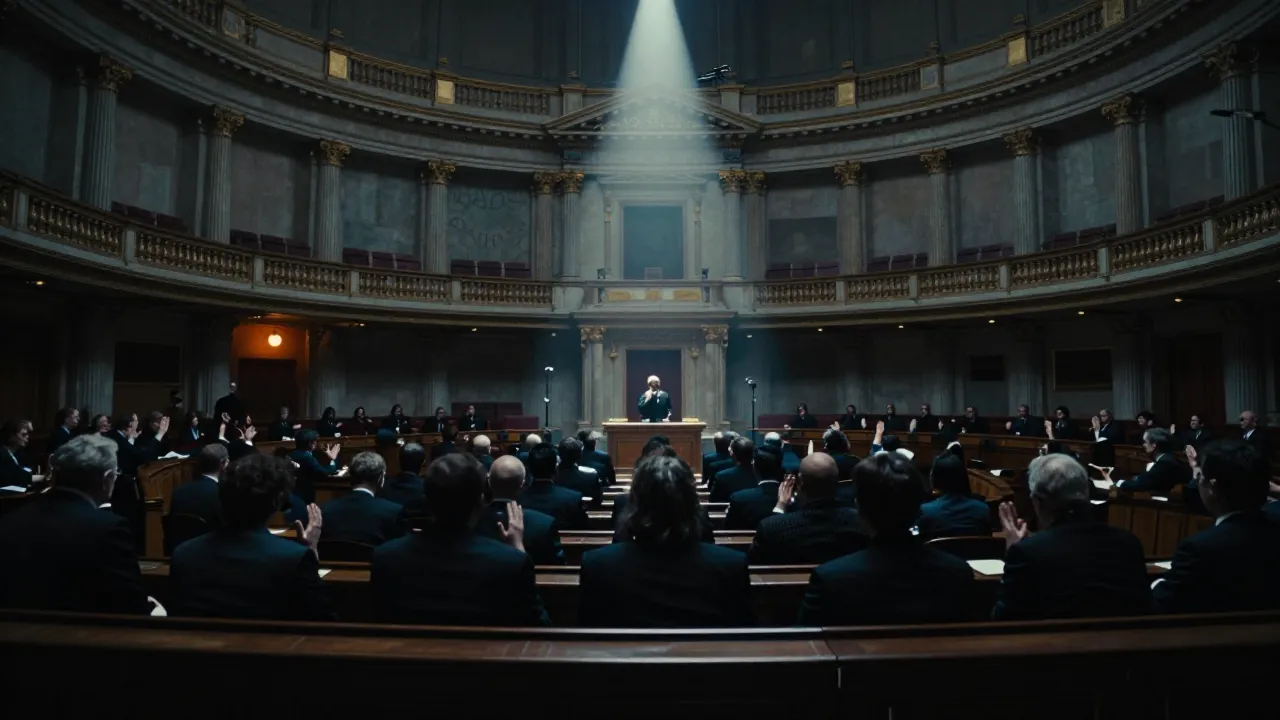
On June 30, 2026, the National Assembly found a comfortable majority to vote for assisted dying. The coalition of the bill’s supporters held. However, this arithmetic result says nothing about the democratic legitimacy of the process.
Nowhere in the legislative sequence was a referendum considered, despite it being the only instrument capable of measuring the nation’s true assent on a question of this nature. The European democracies that have taken this path - the Netherlands, Belgium, and more recently others - have all proceeded through parliamentary channels, without ever submitting the question directly to their citizens. France is following in their footsteps.
The arguments put forward to dismiss this option are well known:
- the complexity of the subject would make a referendum unsuitable;
- polls show a majority of public opinion is in favor;
- Parliament is sovereign to legislate on ethical issues.
Each of these arguments warrants challenge. Complexity is not an obstacle to a referendum - it is precisely the reason why a broader public debate is necessary. Opinion polls on abstract questions do not constitute a democratic mandate. And parliamentary sovereignty, rightly invoked for ordinary legislation, loses its legitimacy when applied to revising a fundamental taboo without an explicit mandate from voters.
Intermediary Bodies Sidelined from the Deliberative Process
One of the most striking features of this legislative process is the systematic marginalization of the institutions that traditionally structure the bioethical debate in France and Europe.
Several key actors have been relegated to the periphery of the process:
- The Catholic Church, along with Protestant and Orthodox Churches, whose theological and ethical positions on the inviolability of human life have been reclassified as sectarian opinions with no universal relevance;
- The Medical Association (Ordre des médecins), whose conscience clause - though indeed written into the text - does not resolve the issue of the structural transformation of the caregiver’s role that the law entails;
- Palliative care associations, which warned of the chronic shortage of the French palliative care network before any legalization of active assistance in dying;
- Families, whose role in end-of-life support is not formally recognized in the request procedure as defined by the text.
The conscience clause provided by the bill for healthcare professionals certainly constitutes an individual guarantee. But it does not answer the systemic question: in a public hospital under permanent strain, will institutional pressure on reluctant caregivers truly be non-existent?
The Senate Shuttle: A Formal Lock
According to the National Assembly itself, “the bill must now be examined by the Senate in a new reading, before a potential final reading by the Assembly (in the event of persistent disagreement on the text).” This phrasing summarizes the constitutional architecture at play: if the Senate rejects or substantially amends the text, the Assembly has the final word.
The Senate has already rejected the right to assisted dying during a previous reading - the upper house has historically acted as a brake on this issue. But the logic of the legislative shuttle, in its current configuration, mechanically leads to a predictable result: the National Assembly, where the majority in favor of the text is established, will ultimately hold the power of final adoption.
The Senate debate remains useful: it can force the bill’s sponsors to clarify ambiguous provisions, strengthen procedural safeguards, and publicly document objections. But it cannot, on its own, substitute the lack of initial democratic legitimacy with a legitimacy that no chamber can self-attribute on an issue of this scope.
An Undeliberated European Convergence
The French trajectory is part of a continental dynamic that deserves to be called what it is: a normative convergence through successive imitation, without a common deliberative architecture.
The Netherlands legalized euthanasia in 2002, and Belgium did the same that year. These pioneering legislations have gradually expanded their scope: in Belgium, euthanasia was extended to minors in 2014, and then to people suffering from psychiatric disorders without a life-threatening prognosis. Each expansion was presented, at the time of its adoption, as exceptional and strictly regulated. Each time, it served as the starting point for the next.
This movement does not result from a formal supranational decision - no European text imposes assisted dying on member states. It stems from another, more diffuse logic: the circulation of models among legislative and bioethical elites, pressure from specialized European advocacy groups, and the gradual reclassification of opposition as a retrograde stance incompatible with “European values.”
France, which had long resisted this convergence, is now falling into line - not through a sovereign decision clearly assumed before the people, but through an accumulation of parliamentary readings during a favorable political window of opportunity.
What the Haste Reveals
Speed is not neutral. Legislating in a matter of weeks on an issue that centuries of civilization had kept outside positive law says something about the state of democratic deliberation in Western Europe.
This is not the first time that major anthropological transformations have been handled through ordinary procedures, without public consultation, and on a schedule that discourages in-depth scrutiny:
- The legal redefinition of marriage in 2013 followed a comparable trajectory: intense parliamentary debate, mobilized intermediary bodies, but no referendum on an issue that affected the definition of a millenia-old institution.
- The successive modifications to the Leonetti law on the end of life were each time presented as technical adjustments before cumulatively constituting a silent revolution in law.
The law on assisted dying is not a technical text. It alters the state’s relationship to life and death, redefines the doctor’s mission, and transforms the meaning of the act of care. These questions deserved a different tempo, other deliberative spaces, and another form of collective consent than the vote of a parliamentary majority assembled in a specific political configuration.

Whether or not this observation is shared by those who support the substance of the text, it remains: a democracy that legislates on its anthropological foundations at a forced march risks widening, even further, the gap between the institutions that decide and the people in whose name they are supposed to do so.