

The Pension Monitoring Committee recommends capping pensions to escape a situation it deems “alarming” - a technical recommendation that nevertheless, in practice, impacts millions of households without ever going to a vote.
An Expert Diagnosis That Acts as a Decision
The matter seems technical. It is only so on the surface. According to Le Monde, the Pension Monitoring Committee - a body of unelected experts - has issued an opinion recommending that pensions be capped in order to escape a situation described as “alarming.” The word is not chosen lightly: it immediately establishes a climate of urgency which, in a democracy, traditionally serves to justify rapid decisions made outside the slow pace - and safeguards - of parliamentary debate.
This mechanism is not new. Since the 2014 reform, an expert committee was established precisely to assess each year whether the pension system is deviating from its balanced trajectory. But over time, the gap between technical assessment and political prescription has shrunk considerably:
« A body supposed to inform Parliament’s choices ends up preceding them - or even replacing them. »
The Committee does not vote on laws. It is not accountable to voters. It issues a data-driven assessment and a recommendation that, almost mechanically, will impose itself on the upcoming budget debate.
Pension De-indexing: Who Pays the Bill?
The core of the recommendation concerns the indexing of pensions to inflation. Freezing or limiting this adjustment concretely means shifting the cost of the country’s demographic and budgetary adjustment onto retirees. Yet this choice is far from neutral:
- it primarily affects generations who contributed throughout their working lives under rules they did not set;
- it comes at a time when trust in the system is already severely eroding;
- it shifts the burden of adjustment onto those who no longer have the capacity to compensate through work.
This climate of mistrust is well-documented: according to a study shared by Les Echos, 63% of French people state they do not trust the pay-as-you-go pension system - seven points higher than in 2024. Every new restrictive measure, decided outside the direct control of voters, can only worsen this erosion.
Parliament, a Spectator to Its Own Arbitrations
The institutional process is worth recalling to measure what it implies:
- An expert committee delivers a technical diagnosis.
- This diagnosis, presented as “alarming,” immediately frames the scope of possible responses.
- The government incorporates all or part of the recommendation into a social security financing bill.
- Parliament debates - but on a playing field already largely mapped out by technocratic expertise.
This sequence, documented by Le Monde, illustrates a phenomenon broader than the pension issue alone: the way independent bodies, originally designed to inform public decision-making, end up pre-formatting it to the point of reducing the room for maneuver of elected representatives. The vote remains formally sovereign; the content of what is voted on, however, is less and less so.
As l’Humanité summarizes in an older but still relevant analysis of the mechanics of austerity:
« Retirees are becoming the unruly hostages of decisions they never chose. »
What Social Contract for Future Generations?
The pay-as-you-go system is based on a simple principle: working people fund the pensions of retirees, with the implicit promise that they will in turn benefit from the same mechanism. Every restriction imposed through technocratic channels - without a substantive debate publicly assumed by the political leaders themselves - weakens this intergenerational pact:
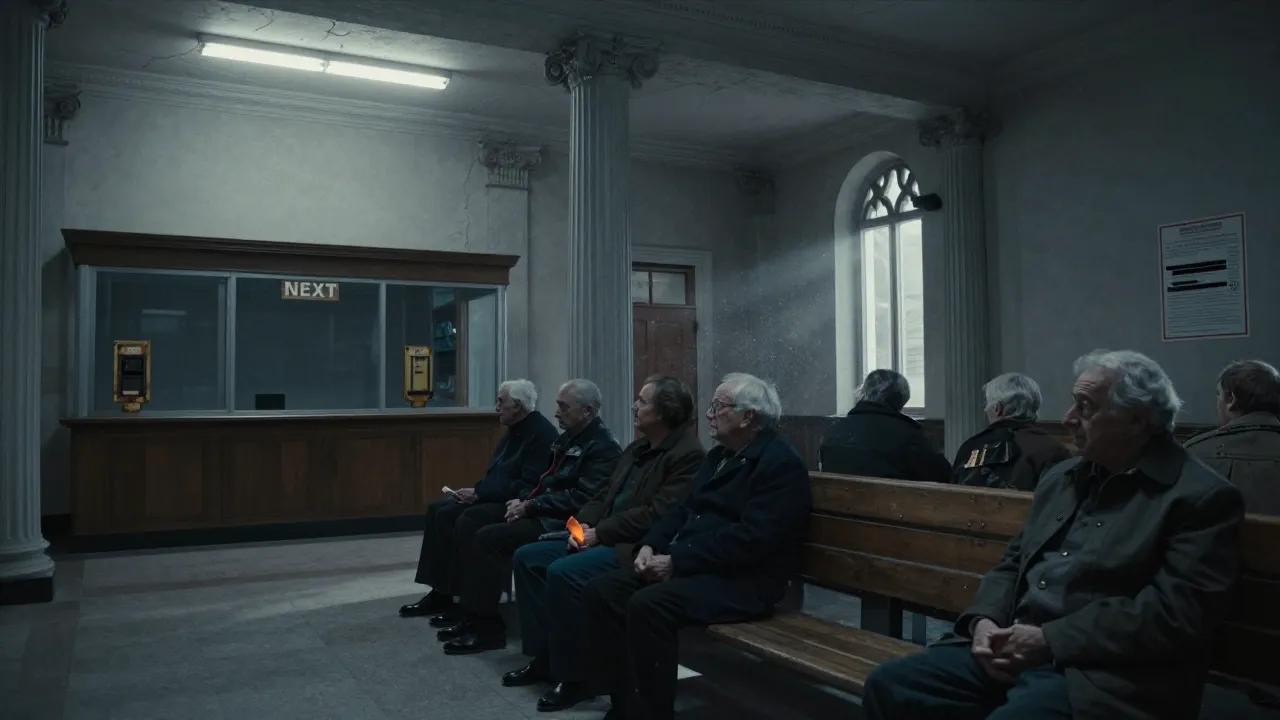
- current retirees see their purchasing power eroded in the name of a budgetary trajectory they did not vote for;
- working people, already skeptical about the sustainability of the system according to the study cited by Les Echos, fear contributing to a system that, in the long run, will guarantee them nothing equivalent;
- the very legitimacy of intergenerational solidarity is weakened, due to the lack of a clear democratic debate on the choices being made.
A Trajectory Common to All of Western Europe
The French case is not isolated. Throughout Western Europe, demographic aging is pushing governments to entrust technical bodies - independent committees, fiscal authorities, actuarial forecasting agencies - with setting the pace of reforms. The process is similar from one country to another: an expert diagnosis, presented as indisputable because it is backed by figures, which correspondingly reduces the space for national democratic debate.
Looking Ahead
The question raised by this sequence goes far beyond the mere amount of pensions. It questions the space that European democracies still leave for political decision-making in the face of technocratic expertise, and the ability of citizens to decide for themselves, through their representatives, on the balances that shape their shared future - rather than seeing them dictated, year after year, by bodies whose mandate no one remembers ever approving.